
HOUSE OF MUSE INTERIORS
12 Warm and Inviting Living Room Ideas for an Organic Modern Home
A warm and inviting living room is about more than choosing beautiful furniture or adding decorative accessories. It comes from the way colors, materials, lighting, and proportions work together to create a space that feels both considered and comfortable.
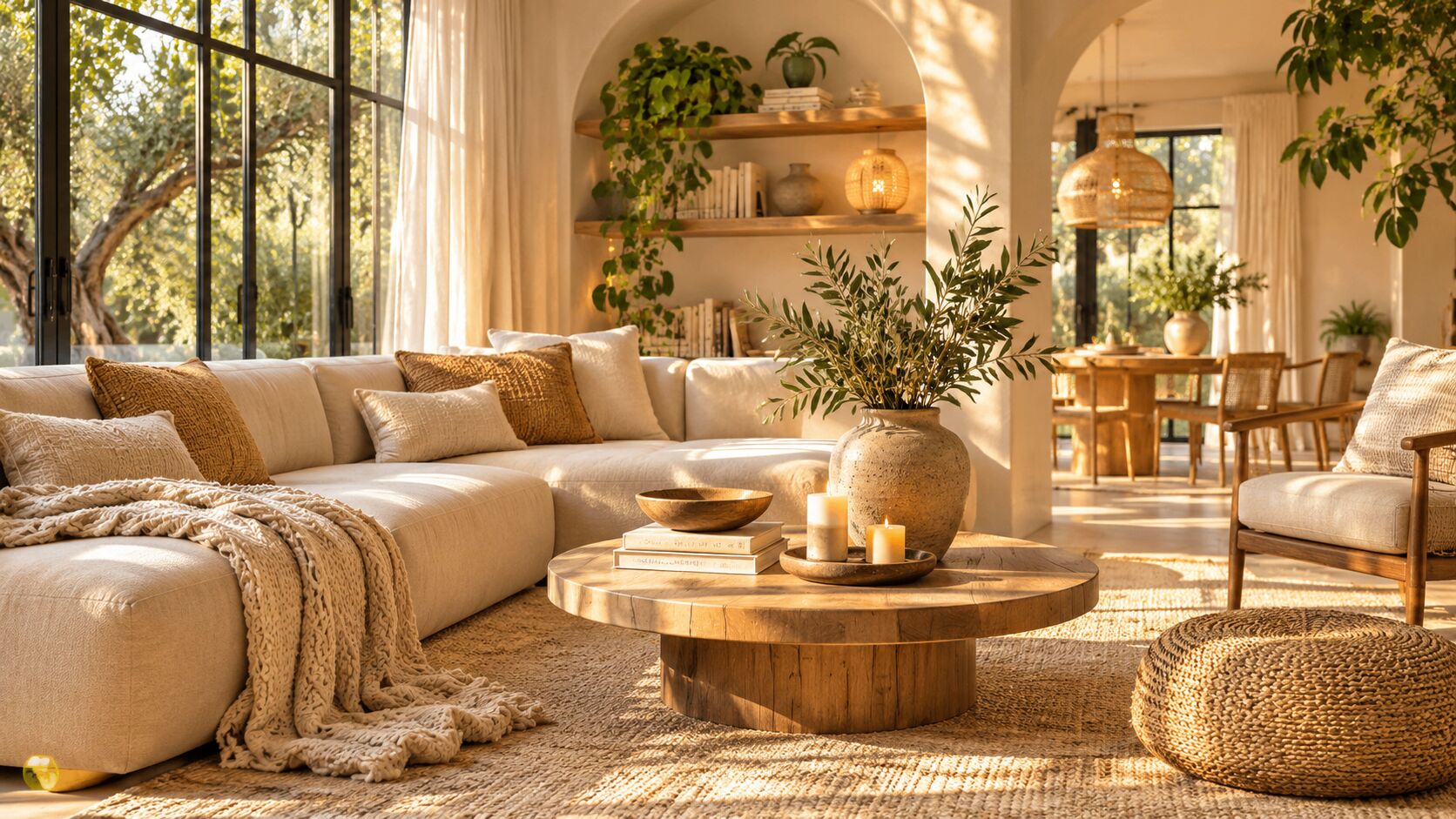
Organic Modern design offers a timeless foundation, combining clean lines, natural materials, and soft neutral tones. With a few relaxed Boho touches, the look becomes warmer, more layered, and personal.
Whether you’re refreshing your living room or starting from scratch, these 12 ideas will help you create a space that feels thoughtfully designed and welcoming every day.
1. Create a Warm Neutral Color Palette
A warm neutral palette creates a calm foundation, but the secret is to use more than one shade. Layering ivory, cream, sand, taupe, and warm brown gives a room depth without making it feel busy.
- Choose a dominant shade for walls and larger surfaces.
- Introduce a second neutral through upholstery, curtains, or rugs.
- Add subtle contrast with muted olive, terracotta, or deeper wood tones.
Designer Tip: Pay attention to undertones. Test paint samples next to your flooring and furniture, and observe them in both natural and evening light. A beige that looks warm on its own may appear quite different beside a cool-toned floor.
2. Combine Natural Wood and Organic Materials
Natural materials bring warmth and character to a living room. Wood, stone, rattan, ceramics, and woven fibers create a relaxed atmosphere that feels connected to nature.
- Introduce wood through coffee tables, consoles, shelving, or accent furniture.
- Mix in stone, travertine, ceramic, or woven details.
- Balance rustic textures with clean-lined furniture and simple silhouettes.
Designer Tip: Avoid matching every finish. A thoughtful mix of natural materials and wood tones makes a room feel collected over time rather than purchased as a complete furniture set.
3. Layer Textures for a Cozy, Collected Look
Texture is essential when working with a neutral color palette. It adds visual interest and makes a room feel inviting without relying on strong patterns or bold colors.
- Combine linen, cotton, boucle, wool, and woven fabrics.
- Mix smooth surfaces with tactile finishes.
- Add softness through cushions, throws, upholstery, and rugs.
Designer Tip: Repeat a few textures in different parts of the room. This creates a subtle connection between the furniture and accessories while keeping the overall look relaxed.
4. Choose the Right Rug Size
A well-proportioned rug visually connects the seating area and helps define the living room, especially in an open-plan layout. A rug that is too small can make even beautiful furniture feel disconnected.
- Aim to place at least the front legs of the sofa and accent chairs on the rug.
- Consider 8′ × 10′ or 9′ × 12′ sizes as starting points, depending on the room.
- Measure the entire seating arrangement before choosing a rug.
Designer Tip: Choose the rug according to the furniture layout, not just the coffee table. Its purpose is to anchor the seating area and bring the individual pieces together.
5. Arrange Furniture for Comfort and Flow
Good furniture placement makes a living room feel natural to move through and comfortable to use. Rather than automatically pushing every piece against the walls, think about how people will sit, talk, and move around the space.
- Arrange seating around a shared focal point, such as a coffee table or fireplace.
- Keep clear walking paths between the main areas.
- Position chairs close enough to encourage conversation without overcrowding the room.
Designer Tip: Consider circulation before adding furniture. A beautiful layout should feel balanced, but it must also work for everyday life.
6. Choose and Style a Coffee Table with Intention
The coffee table connects the seating arrangement and offers an opportunity to introduce another material or shape. Its proportions matter just as much as its appearance.
- Choose a table that feels balanced with the length and scale of your sofa.
- Leave approximately 14–18 inches between the sofa and table as a comfortable starting point.
- Style it with a small stack of books, a ceramic object, a vase, or a decorative bowl.
Designer Tip: A round or oval table can soften a room with many straight lines. Keep some surface area clear so the table remains practical, not just decorative.
7. Create a Cozy Secondary Seating Corner
An accent chair or small reading nook can make a living room feel more complete. It introduces another place to relax and helps the space feel layered rather than arranged around a single sofa.
- Place a comfortable chair near a window or in an underused corner.
- Add a small side table for books or a cup of coffee.
- Include a floor lamp and a soft throw for extra comfort.
Designer Tip: Treat the corner as part of the overall room. Repeat one or two colors or materials from the main seating area so it feels connected rather than like a separate arrangement.
8. Layer Lighting for a Warm Atmosphere
A single ceiling light rarely creates the most inviting atmosphere. A combination of light sources adds depth and lets you adapt the room to different activities and times of day.
- Use ceiling lighting for general illumination.
- Add floor and table lamps near seating areas.
- Use accent lighting to highlight artwork, shelving, or architectural details.
Designer Tip: Look for warm-white bulbs around 2700K–3000K for a relaxed residential feel. Dimmable lighting gives you more control over the atmosphere, especially in the evening.
9. Make the Most of Natural Light
Natural light brings warmth and dimension to a room, highlighting the textures and finishes that make Organic Modern interiors feel special.
- Use sheer or lightweight curtains to soften daylight.
- Hang curtain rods higher and wider than the window frame when the room allows.
- Keep window areas visually uncluttered.
- Use mirrors thoughtfully to reflect available light into darker areas.
Designer Tip: Notice where sunlight falls throughout the day. Instead of hiding every shadow, let natural light and its changing patterns become part of the room’s atmosphere.
10. Bring Nature Indoors
Plants and organic details add life, softness, and a connection to the outdoors. They work particularly well against warm neutral walls and natural materials.
- Use a larger plant to bring balance to an empty corner.
- Add smaller plants or branches to shelves and side tables.
- Choose planters in ceramic, terracotta, stone, or woven finishes.
Designer Tip: Think about scale and placement. One well-chosen plant can make a stronger statement than several small accessories scattered around the room.
11. Add Softness with Cushions and Throws
Soft furnishings make a living room feel more comfortable and offer an easy way to introduce subtle color and texture.
- Mix cushion sizes and shapes rather than choosing identical sets.
- Combine fabrics such as linen, cotton, boucle, and woven textiles.
- Add a throw with a relaxed drape over a sofa or accent chair.
Designer Tip: Keep the palette coordinated, but don’t make everything match. A little variation creates a more natural and personal look.
12. Finish with Art and Personal Details
Artwork and meaningful objects give a living room its identity. These final layers make the space feel lived in rather than styled only for a photograph.
- Choose artwork that complements the room’s palette and proportions.
- Mix framed prints with textured art or sculptural wall pieces.
- Display a few personal objects, books, or collected pieces.
- Leave enough empty space for each detail to stand out.
Designer Tip: Resist the urge to fill every surface. A few thoughtful pieces, chosen with care, often create a stronger impression than a room filled with accessories.
A Living Room That Feels Like Home
Creating a warm and inviting living room is not about following every trend or buying everything at once. It’s about finding the right balance between comfort, natural materials, thoughtful proportions, and personal details.
Start with what you already have, make intentional choices, and let the room evolve over time. The most beautiful spaces are not simply styled to look good — they are designed to feel good to live in.